
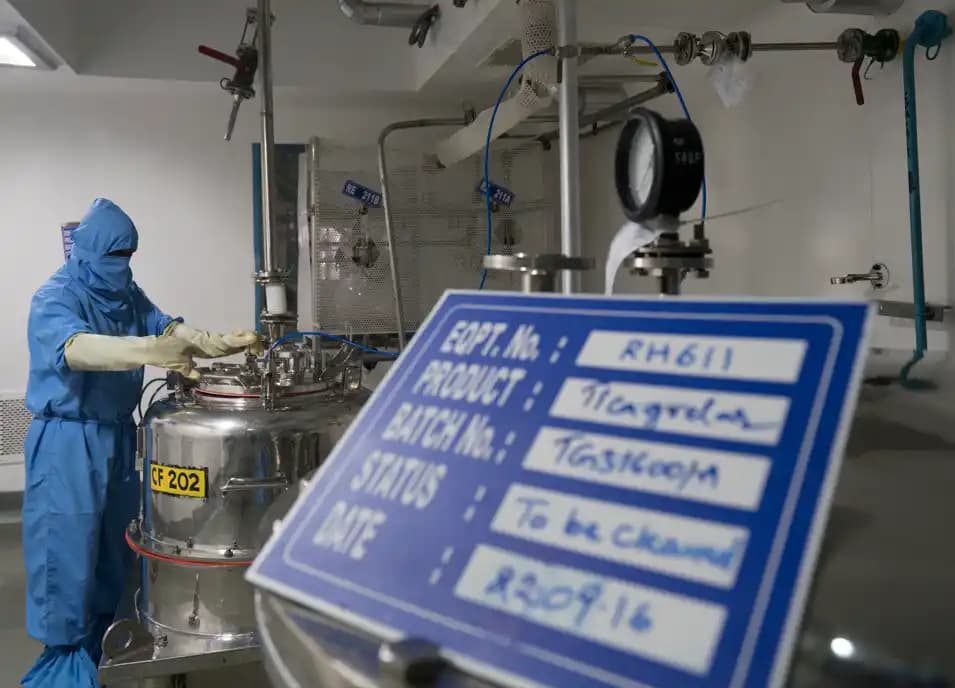
Choosing the right CDMO (Contract Development and Manufacturing Organization) is a pivotal decision in drug development and commercial manufacturing.
One of the first considerations is whether to partner with a boutique CDMO or a large CDMO. Boutique CDMOs are typically specialized firms, while large CDMOs are big one-stop-shop providers with global operations.
Each model has its own advantages and challenges. This article explores boutique vs large CDMO characteristics, the CDMO selection criteria to consider, and how to choose the right CDMO partner for your project.
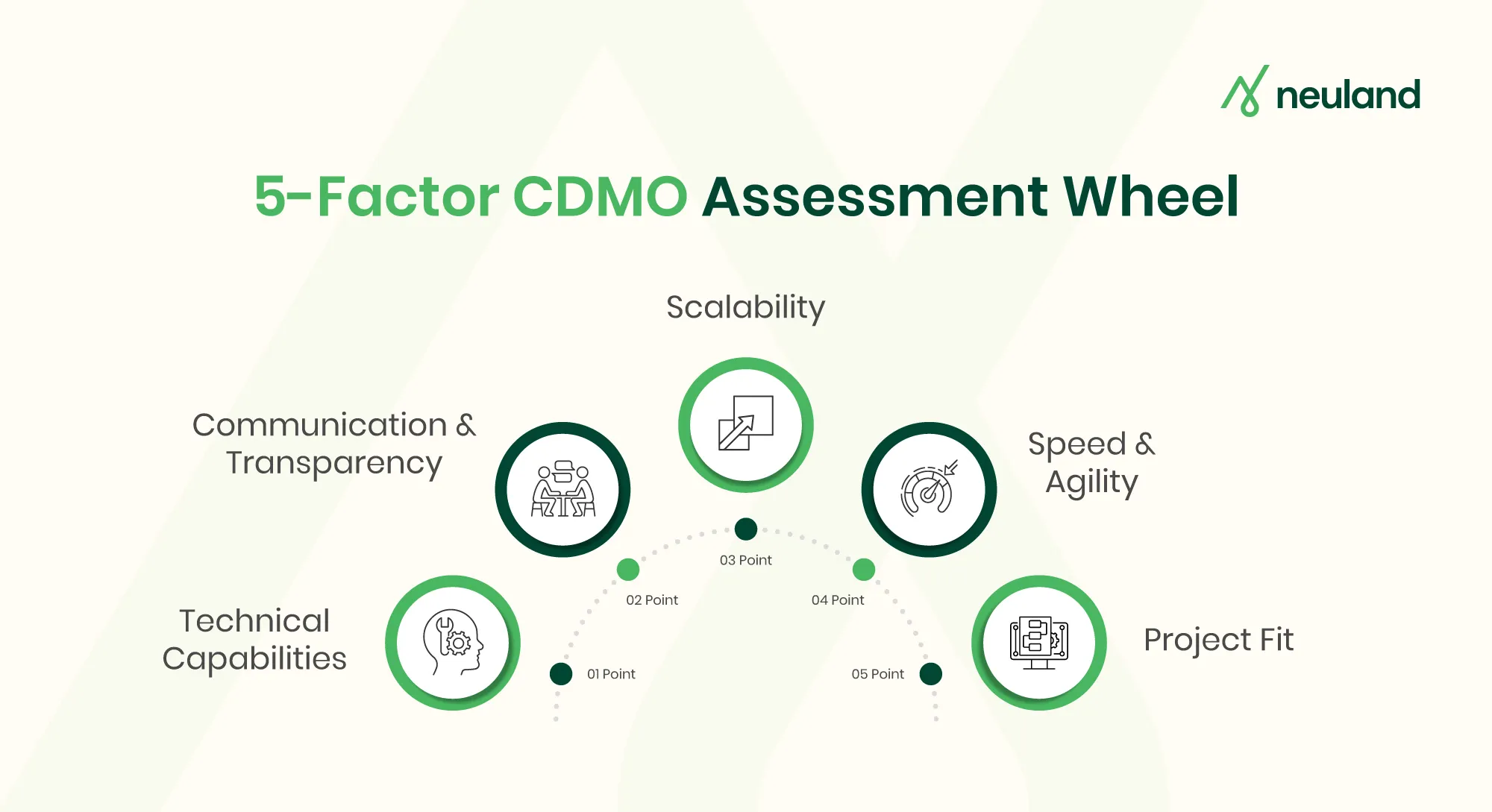
Scalability and Capacity in CDMO Partnerships
One of the most crucial factors in choosing a CDMO partner is scalability and capacity – essentially, can the CDMO support your project’s needs today and in the future? This consideration often tilts the decision between boutique vs. large CDMO:
Project lifecycle support
If your molecule is in early development, you might start with small-scale batches. But you should plan ahead: will the CDMO be able to take you through clinical trials to commercial production?
Changing CDMO late in development can be costly and risky. A large CDMO with high capacity might give more confidence for lifecycle support. However, some boutique CDMOs mitigate this by partnering with larger manufacturers or investing in scale-up equipment, ensuring they can grow with your project.
It’s wise to directly ask potential partners about their largest production scale and how they manage a product’s growth from pilot to commercial.
Being a priority vs. being overlooked
CDMO selection criteria should include assessing how important your project will be to the CDMO. At a huge CDMO, a small-volume project could struggle for mindshare, raising the fear of being overlooked by a larger CDMO.
You want a partner that has enough capacity to not become a bottleneck, but also one that values your business. During due diligence, examine the CDMO’s current workload and client mix.
If they mostly handle giant clients and you’re a startup, ensure they have a model for handling smaller accounts with care. Conversely, if the CDMO is small, ensure they have a plan (or external alliances) to scale up production when you need it.
Technical capabilities at scale
Some processes behave differently at a large scale than at bench scale. Make sure the CDMO has proven technical expertise in scale-up for your type of product.
For example, if working with complex peptides or potent compounds, does the CDMO have specialized equipment and containment at larger scales?
A boutique CDMO focusing on your product type may have deep know-how, but verify their largest successful batch or any commercial launches they’ve supported. Ask for case studies or success rates with scaling processes.
Cost Considerations When Selecting a CDMO
Cost is always an important factor, though it should be evaluated in context. When comparing a boutique CDMO and a large CDMO, consider these cost-related aspects:
Pricing structure and overhead
Large CDMOs, with their global facilities and extensive staff, often have higher overhead costs. This can sometimes reflect in their pricing – day rates or FTE (full-time equivalent) costs might be higher.
Clients fear budget overruns associated with a large CDMO, given the complexity and size of those organizations. Boutique CDMOs may have lower overhead and more flexible pricing for development work.
Per-unit cost versus total cost
As mentioned earlier, a large CDMO running big batches can reduce the per-unit manufacturing cost significantly thanks to economies of scale.
It’s important to differentiate cost considerations at different stages: early-stage flexibility (maybe less cost-efficient per unit, but you only make what you need) versus late-stage efficiency (you want a low cost per pill at high volumes).
Consider the total cost of the partnership, including intangible costs like delays. A lower-cost provider that delivers late can actually cost more in lost market time.
Infographic 2 idea:
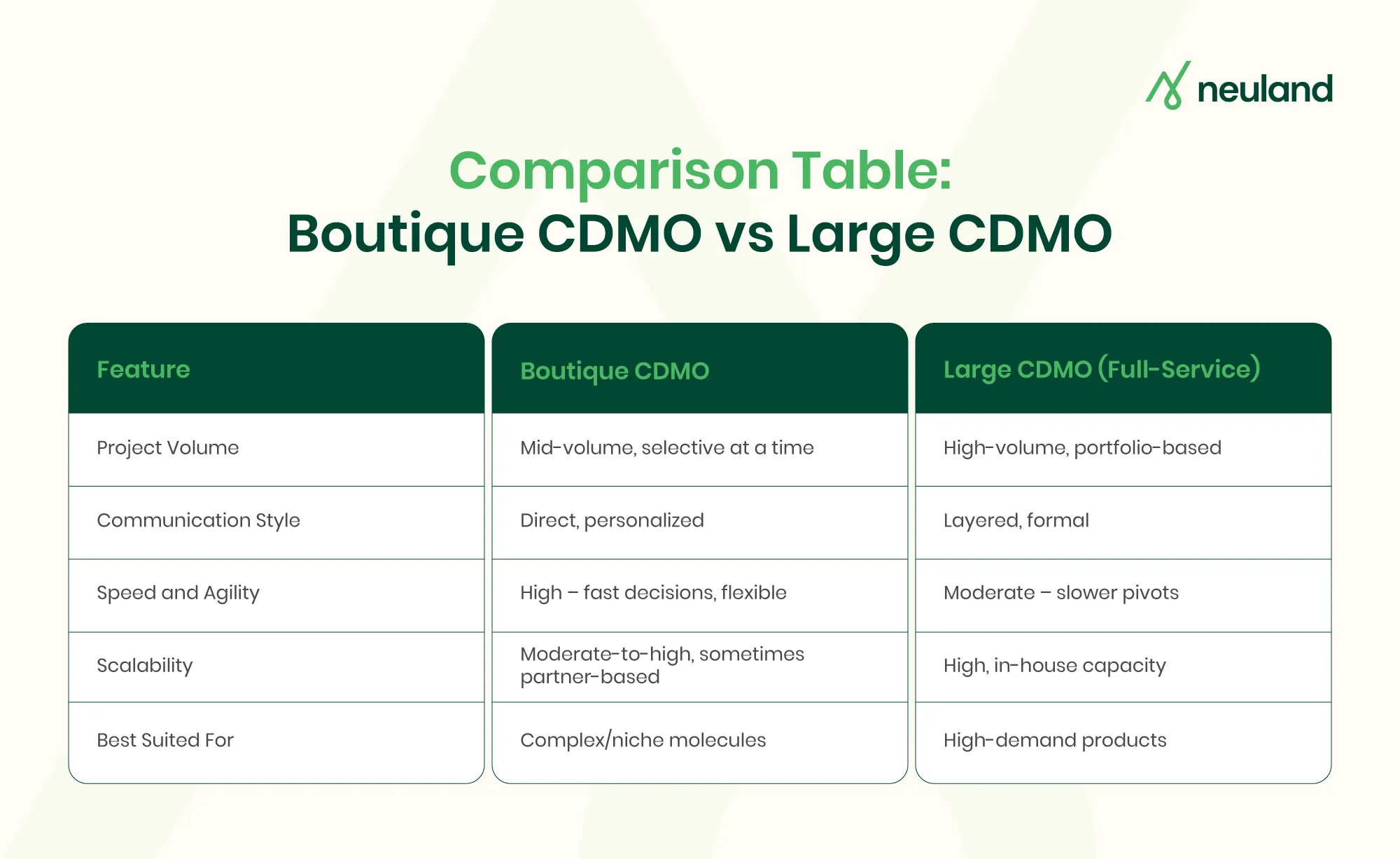
A Boutique CDMO Offers Flexibility and Personalized Service
Boutique CDMOs are known for their agility and client-focused approach. Because they often operate focusing on niche technologies or product types, they can provide a level of service and flexibility that is hard to match at larger organizations.
Key advantages of boutique CDMO providers include:
- Personalized, attentive service: CDMOs tend to give clients more hands-on attention. Personalized service in CDMO means your project won’t get lost in the shuffle. In fact, many boutique CDMOs pride themselves on building close relationships and ensuring every client feels valued.
- Flexibility and agility: Without the heavy bureaucracy of a big corporation, boutique teams can adapt quickly to changing project needs. Whether it’s tweaking a formulation or expediting a timeline, a boutique CDMO can typically pivot faster. For example, if a trial result requires an immediate process adjustment, a smaller CDMO can often respond almost instantly, avoiding lengthy approval chains.
- Streamlined communication: You often work with a dedicated team that’s in constant contact, which leads to transparency in CDMO services and fewer miscommunications. Quick, effective communication ensures that updates and issues are conveyed promptly, keeping the client in the loop at all times. This transparency builds trust and helps prevent surprises.
- Specialized expertise: Many boutique CDMOs carve out a niche in specific domains. For a client with a complex or novel molecule, partnering with a specialized boutique CDMO can mean a higher likelihood of overcoming technical challenges.
How to Choose the Right CDMO Partner for Your Needs
When evaluating CDMOs, it’s important to recognize that niche CDMOs (often labeled as boutique) offer focused expertise and agility, while full-service CDMOs (larger, integrated firms) provide broad capabilities such as early development and formulation or final dosage forms such as tablets, capsules, or injections.
The right choice depends on your project’s goals.
- Define project priorities: Start by clarifying what matters most—speed, scalability, niche expertise, or cost. If agility and attention are crucial, a niche CDMO might be ideal. For high-volume commercial supply, a full-service CDMO may be better suited. Ask key questions upfront to align expectations.
- Assess technical expertise: Review the CDMO’s track record with your product type. A firm like Neuland, with deep experience in peptides and small molecules, can offer an advantage. Confirm their regulatory history and ability to handle similar INDs or NDAs.
- Examine communication and culture: Responsive, transparent communication is vital. Talk to the project team—not just business development—to evaluate how they collaborate. A good cultural fit and clear communication signals a partner who will be invested in your success.
- Consider scalability and long-term fit: Even if you start with a niche CDMO, understand their long-term manufacturing roadmap. Some sponsors plan hybrid models—starting with a flexible partner, then scaling with a larger CDMO. Ensure your CDMO can support growth or facilitate tech transfer if needed.
- Conduct due diligence: Ask for client references and check compliance history. Benchmarking studies can highlight CDMO strengths in quality and responsiveness. Tour facilities or do virtual audits to ensure capabilities match claims. A strong CDMO partnership starts with transparency and shared goals.
Finding the Right Fit: Choosing a CDMO That Matches Your Vision
There’s no one-size-fits-all in the boutique CDMO vs large CDMO debate. Niche partners offer agility and personalization; full-service providers bring scale and infrastructure. The best choice depends on your priorities—speed, transparency, technical depth, or long-term scalability.
At Neuland Labs, we help our partners make that choice with confidence. With a proven regulatory track record (25 INDs and 4 NDAs filed), we’re positioned to support both development-stage and commercial-scale manufacturing.
- Rapid response times for development-stage decisions and process adaptations
- Early-phase tech packages designed to de-risk later scale-up
- Deep chemistry-first approach tailored to complex small molecules and peptides
- Project continuity ensured by dedicated scientific and tech-transfer teams
- Seamless integration from lab scale to commercial-scale reactors of over 11,74,000 liters of capacity
Ultimately, selecting the right CDMO partner is about alignment—of capabilities, mindset, and communication. Whether you seek focused collaboration or end-to-end scale, look for a partner who’s as invested in your success as you are. Connect with us today to learn more.
FAQs
A boutique CDMO offers agility, focused attention, and faster decision-making—critical for early-stage programs that need iterative development and close collaboration rather than rigid processes and high-volume infrastructure.
Clear, real-time communication and transparency in CDMO services help avoid costly delays, prevent scope misalignment, and ensure smoother execution across development and manufacturing stages.
Yes, a large CDMO or full-service partner typically offers broader infrastructure and higher throughput, making it ideal for projects requiring scalability and capacity in CDMO partnerships for global commercial launches.
Personalized service in CDMOs ensures the partner adapts to your evolving needs, fosters deeper collaboration, and builds continuity—especially valuable for companies with unique molecules or dynamic development pipelines.