
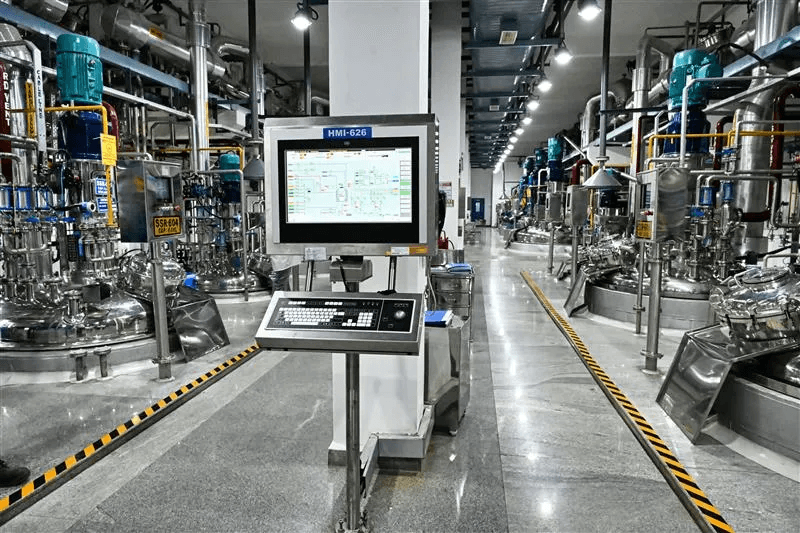
Pharmaceutical manufacturing is one of the most highly regulated environments in the world.
Current Good Manufacturing Practices (cGMP) define the rigorous expectations for documentation, validation, and operational control in this industry, yet despite these standards, manufacturing disruptions, regulatory observations, and supply interruptions still occur across the industry.
For drug manufacturers, these failures can surface at the worst possible moment: During late-stage development, regulatory review, or commercial launch. A single unresolved deviation or inspection finding can delay product release, resulting in significant losses in time and money.
These incidents rarely stem from a single mistake. More often, they reflect vulnerabilities in how contract development and manufacturing organizations (CDMOs) detect risks, manage operational complexity, and respond to early warning signals. As a result, many pharmaceutical companies are now evaluating CDMO partners not just on compliance with cGMP, but on the maturity of their quality management systems.
In this blog, we explain what quality maturity means and how it helps prevent costly delays and failures.
The Root Cause of Manufacturing Failures: The Snowball Effect
Manufacturing failures typically begin with small signals such as minor deviations, recurring analytical anomalies, or poorly evaluated process changes. Similar to a snowball rolling downhill, what begins as a small, overlooked anomaly can gather momentum as it moves through interconnected processes, gradually compounding into larger operational or quality failures. When these small indicators are treated as isolated or “one-off” events, organizations may overlook systemic weaknesses that later lead to batch failures, regulatory problems, or production delays.
Quality-mature CDMOs take a different approach: They focus on proactively stopping the snowball early, identifying and addressing small signals before they accumulate into significant disruptions.
What is Quality Maturity?
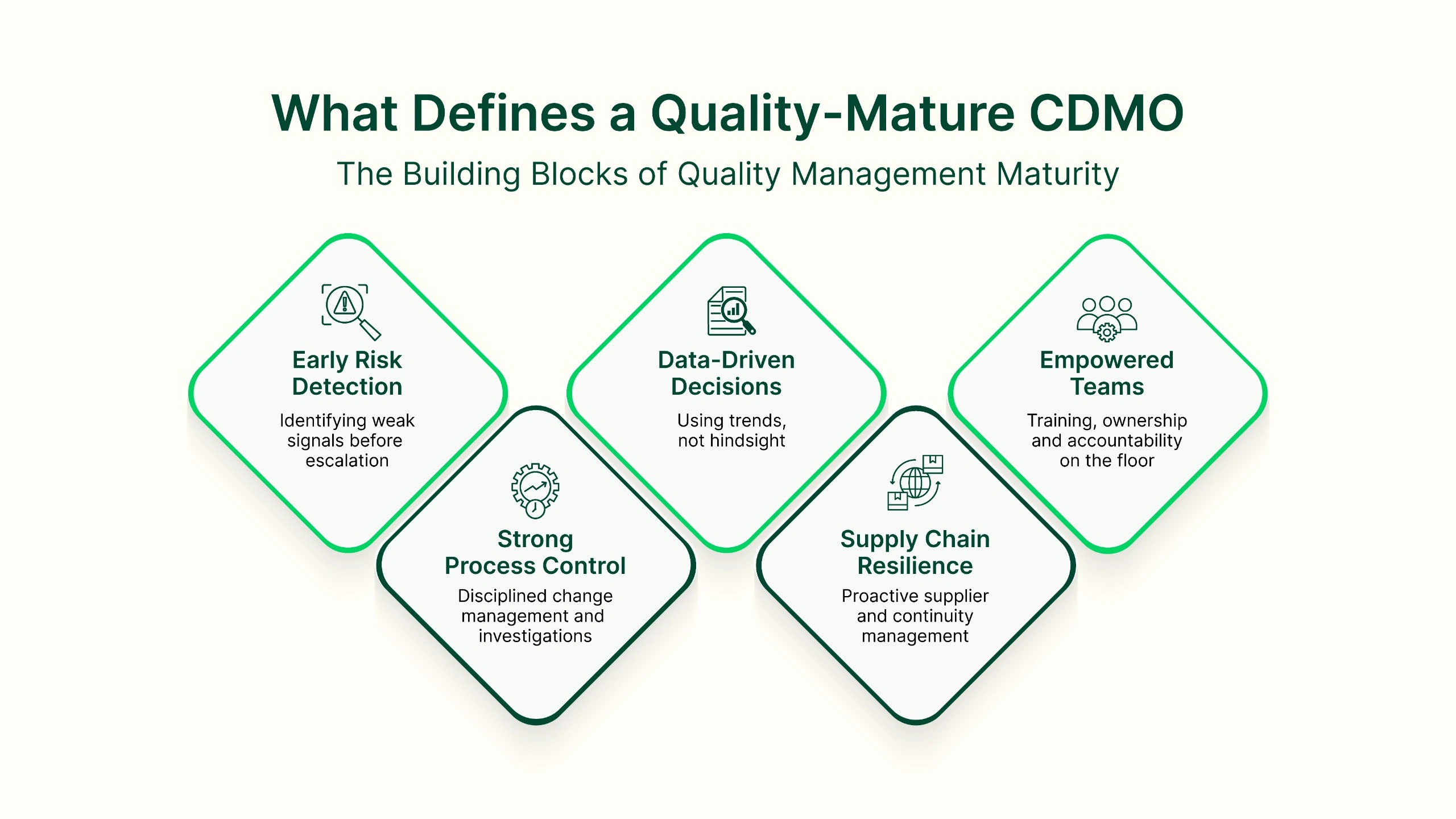
Quality maturity reflects how deeply quality principles are embedded across operations, decision-making, and organizational culture. Mature CDMOs design systems that identify potential problems early, strengthen supply resilience, and create the transparency needed to maintain consistent control of manufacturing processes.
The concept has gained attention through the FDA’s Quality Management Maturity initiative, which encourages pharmaceutical manufacturers to strengthen quality practices beyond baseline cGMP compliance to improve supply reliability and reduce risks such as drug shortages. Research on pilot QMM programs suggests that organizations with more mature quality systems are better able to detect operational vulnerabilities early, address systemic issues rather than isolated events, and build resilient manufacturing and supply networks.
Designing Systems That Prevent Repeat Problems
Rather than simply closing investigations, mature CDMOs analyze operational events to uncover patterns, identify root causes, and strengthen process controls. Continuous review of operational data turns deviations into opportunities for improvement, while disciplined evaluation of process changes helps prevent new risks.
Digital tools support this effort by providing centralized visibility into investigations, process changes, and performance trends. Over time, this structured approach builds organizational memory, enabling manufacturers to identify recurring patterns faster and continuously refine their processes to prevent future disruptions.
Building Resilient Supply Chains
Operational reliability depends not only on mature internal processes but also on the resilience of external supply networks. Pharmaceutical manufacturing relies on interconnected ecosystems of raw material suppliers, equipment providers, logistics partners, and analytical laboratories.
When vulnerabilities arise, such as raw material shortages or transportation delays, disruptions can quickly affect production schedules and product availability.
Organizations with mature quality systems mitigate these risks by carefully evaluating supplier performance and continuously monitoring supply chains for early warning signs. They also build operational flexibility within their facilities so critical processes can continue despite equipment issues, staffing constraints, or external disruptions. Together, strong supplier oversight and operational resilience help ensure consistent manufacturing performance.
Making Manufacturing Data Work for You
Modern pharmaceutical manufacturing generates enormous volumes of operational data. Process parameters, environmental monitoring results, laboratory analyses, and equipment performance metrics all contribute to a detailed picture of production activity.
However, the presence of data alone does not guarantee insight. When information is fragmented across multiple systems or reviewed only after problems occur, organizations may struggle to identify emerging risks.
CDMOs with a mature quality management system focus on transforming operational data into actionable intelligence. Integrated digital systems allow manufacturing, quality, and supply chain teams to monitor performance trends in real time and respond more quickly when anomalies appear.
Automation also plays an important role in reducing manual data entry and the likelihood of human error, while improving traceability across production activities.
As digital systems become more interconnected, organizations gain a broader, “birds-eye” view of operations. This visibility helps teams identify inefficiencies, improve process consistency, and maintain stronger control over manufacturing performance.
Empowering Technical Teams to Stop Problems Early
People remain the foundation of quality in pharmaceutical manufacturing. Because manufacturing personnel, quality specialists, and laboratory scientists interact with processes daily, they are often the first to recognize potential issues.
Quality-mature CDMOs empower employees to raise concerns, investigate anomalies, and escalate risks when necessary. Effective training helps staff understand not only their responsibilities but also how their work impacts product safety and patient outcomes. When combined with open communication channels, this approach enables earlier detection of problems and prevents small issues from becoming larger operational challenges.
What Quality Management Maturity Looks Like at Neuland Labs
At Neuland Labs, quality maturity is reflected in the systems, processes, and culture that guide daily operations. We continuously invest in advanced manufacturing infrastructure, digital operational visibility, and workforce development to support consistent and reliable API production.
By integrating strong operational discipline with continuous improvement initiatives, Neuland works to identify risks early, strengthen supply resilience, and maintain the transparency needed for effective collaboration with our manufacturing partners.
As pharmaceutical manufacturing grows more complex, organizations that prioritize quality maturity will be better equipped to navigate evolving regulatory expectations, protect supply continuity, and support the development of the next generation of powerful therapeutics.
Contact us to see how Neuland Labs can help you with your next project.