Meet us at Tides Europe 2026, Stand No. 805, Nov 3-5, RAI Amsterdam, Netherlands Schedule a Meeting
Peptide APIs present a unique impurity challenge. Small structural variations can significantly impact safety, efficacy, and regulatory acceptance. Unlike small molecules, peptide-related impurities are often difficult to detect, separate, and characterize due to their close similarity to the target molecule.
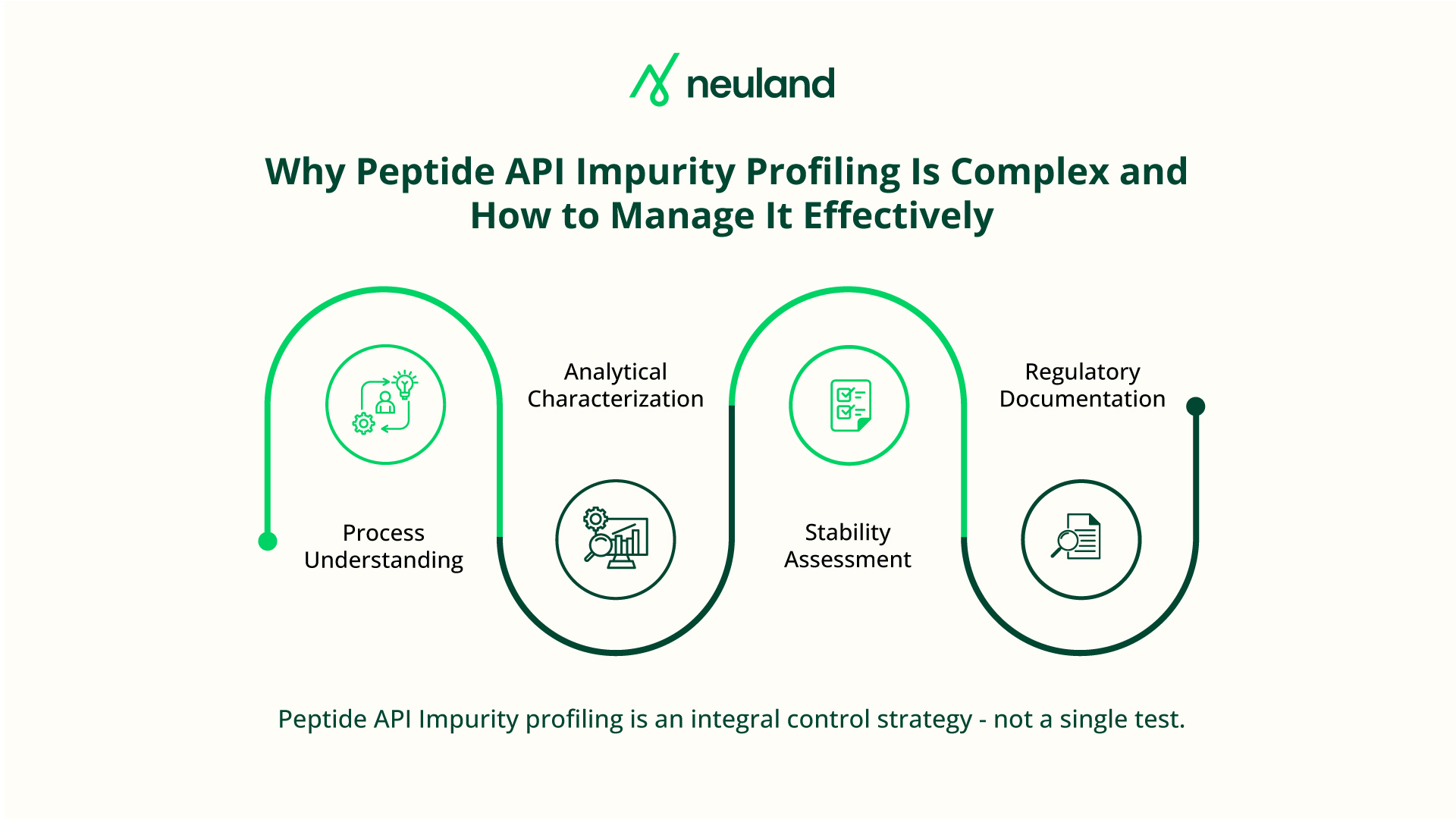
As regulatory expectations for peptide API quality control continue to evolve, sponsors need an integrated approach that connects process understanding, advanced analytical characterization, robust impurity control strategies, and regulatory-ready documentation.
In this article, we explore the key sources of peptide API impurities, the challenges in identifying and separating them, and the analytical approaches required to ensure reliable quality control.
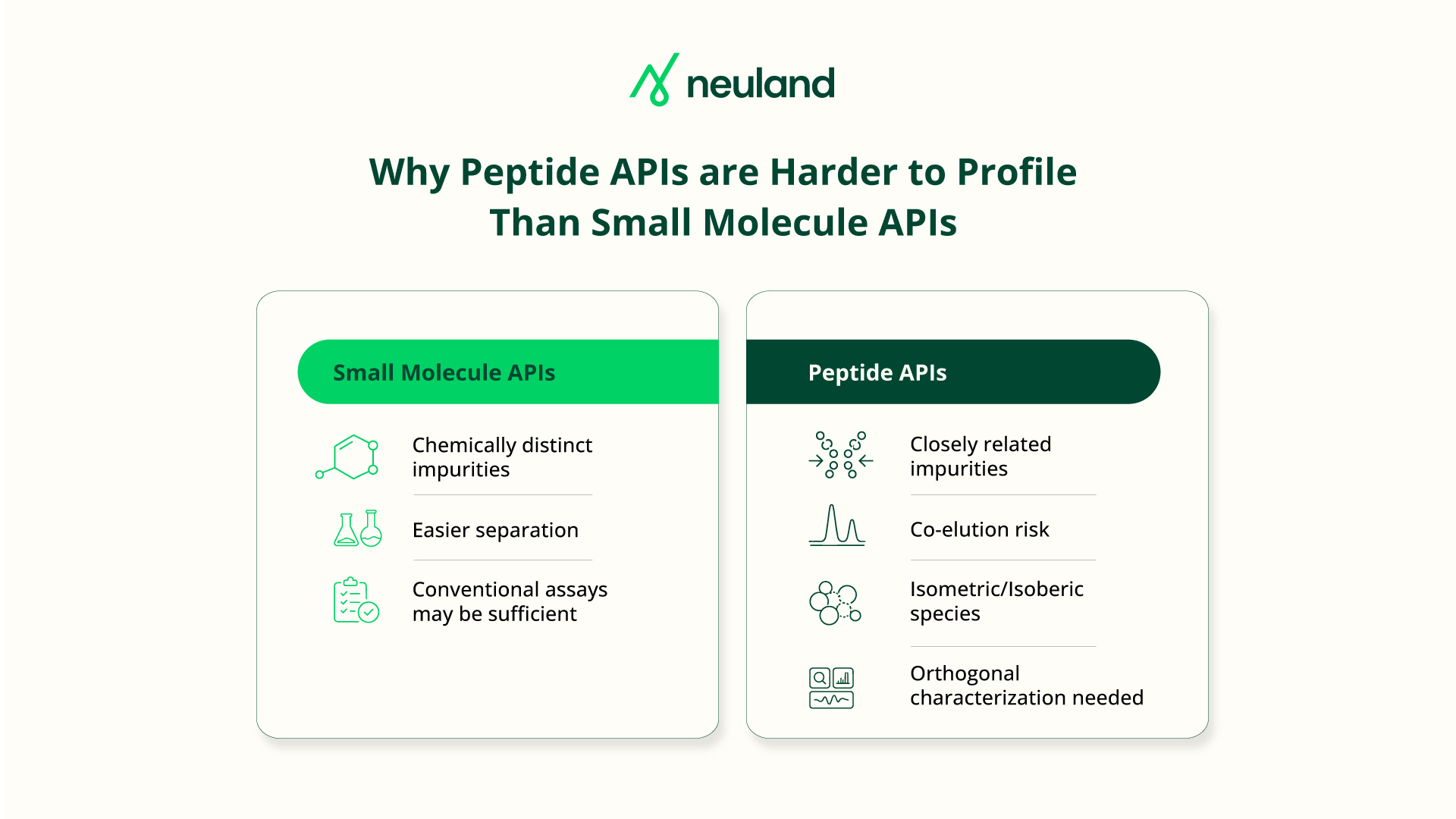
Small molecule APIs typically generate impurities from starting materials, intermediates, reagents, solvents, catalysts, byproducts, or degradation pathways. These impurities are often chemically distinct from the intended API, which can make them easier to detect, quantify, and separate using chromatographic and spectroscopic methods.
Peptide APIs are different: Because peptides are chains of amino acids, many impurities differ from the target molecule by only a small change, including single amino acid deletion/insertion, chemical modification, or stereochemistry. A single missing amino acid, an added residue, a deamidation event, or an epimerized amino acid can create an impurity that closely resembles the desired peptide in molecular weight, charge, hydrophobicity, and biochemical behavior.
These complexities create several challenges for peptide API impurity profiling:
The FDA has specifically recognized that differences in impurities, particularly peptide-related impurities, may affect the safety or effectiveness of peptide drug products. This makes understanding the impurities present essential, not only for regulatory reasons but also for patient safety.
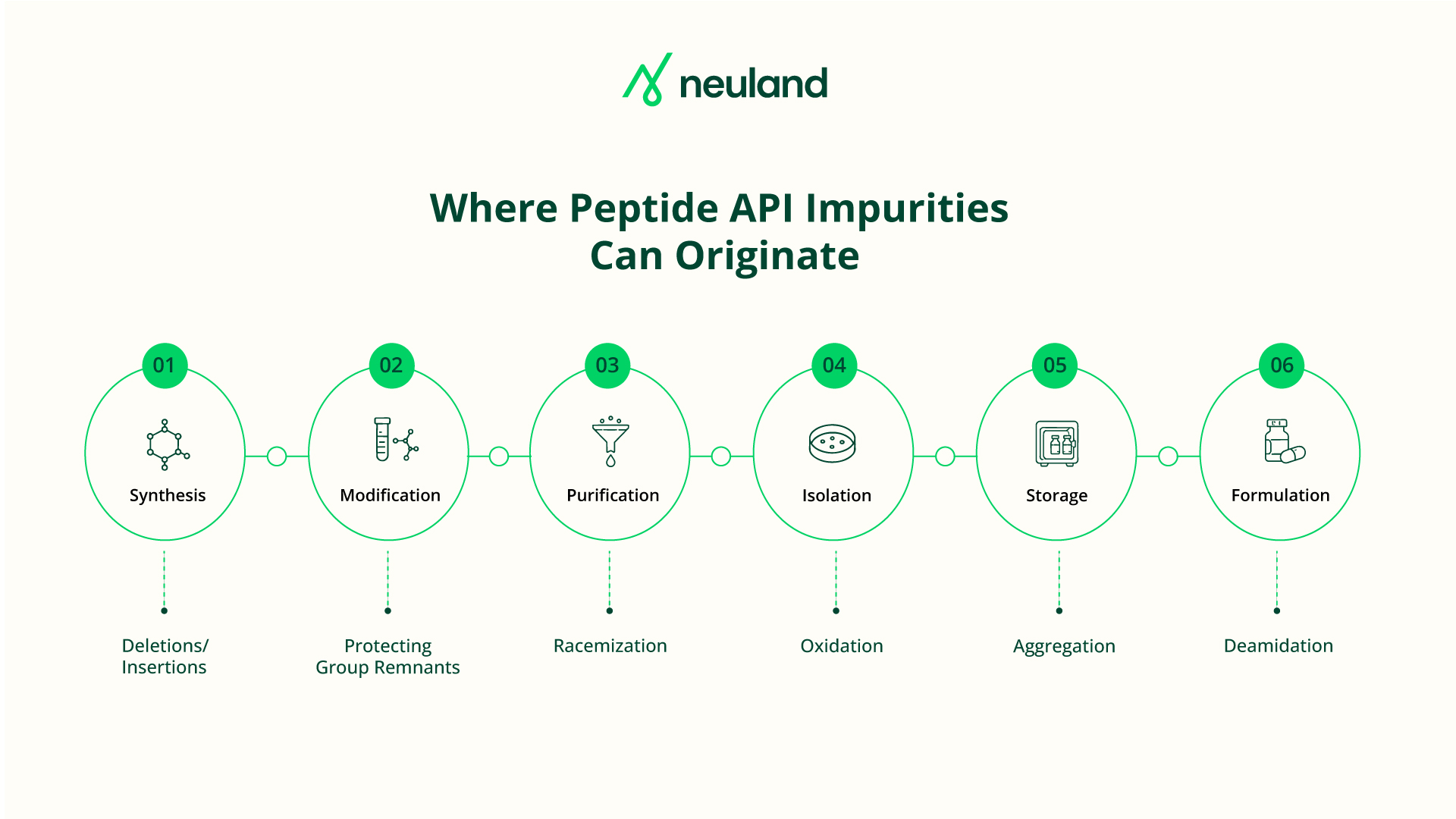
Peptide API impurities can arise during solid-phase synthesis (or other synthesis method), modification, purification, isolation, storage, or formulation. Because peptide manufacturing involves repeated protection, deprotection, coupling, and purification steps, impurity profiles often include both synthesis-related and degradation-related species. Understanding their origin is essential for effective analytical method development and peptide API quality control.
Many peptide APIs are produced using solid-phase peptide synthesis (SPPS), where amino acids are added sequentially. Each cycle creates opportunities for incomplete reactions, side reactions, or sequence errors.
These impurities include amino acid deletions/insertions, incomplete removal of protecting groups (e.g., tBu or trityl), oxidation/reduction products, racemization, diastereoisomerization, deamidation, amination, acetylation of side chains and N- and C-termini, and aggregates.
Even after successful synthesis, peptides can degrade during storage or formulation due to sequence-specific liabilities, pH, temperature, light, moisture, or oxidative stress.
Peptide API degradation impurities are caused by reactions such as β-elimination (caused by cysteine-containing peptides), diketopiperazine formation (caused by cleavage of the first two amino acids when proline or glycine is near the N-terminus), pyroglutamate formation (caused by cyclization of N-terminal glutamine or asparagine, and aspartimide and succinimide formation (caused by aspartic acid and asparagine residues).
Together, these impurities show why peptide API impurity profiling requires process understanding, sequence-specific risk assessment, stress testing, and orthogonal analytical characterization.
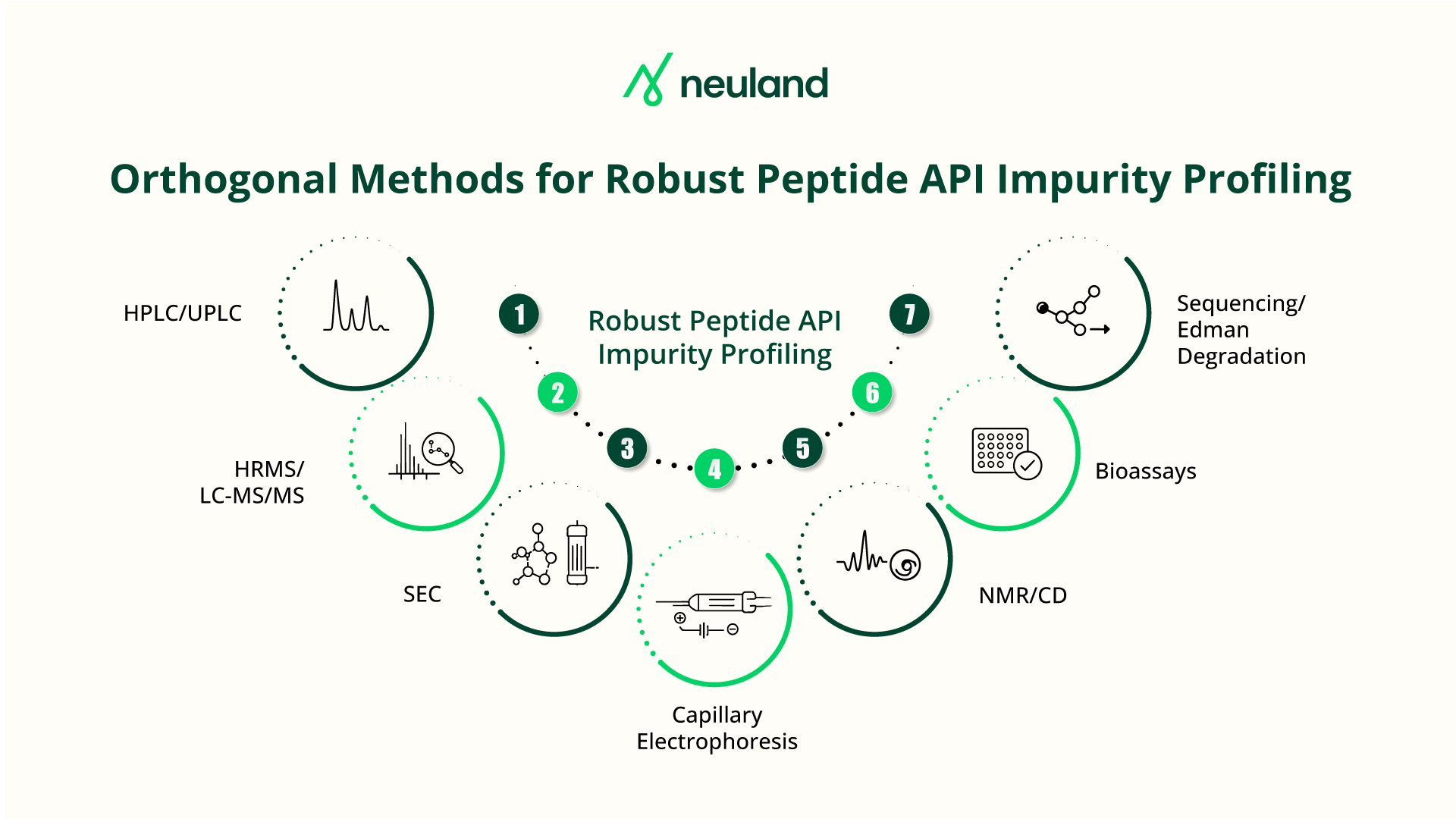
Detecting and characterizing peptide API impurities requires a more sophisticated analytical strategy than is typically required for small molecule APIs. Many peptide-related impurities are structurally similar to the intended product; quality control cannot rely on a single method or purity assessment.
Instead, peptide API analysis depends on orthogonal analytical characterization, which combines multiple high-resolution techniques to evaluate purity, identity, sequence, structure, and biological activity.
Liquid chromatography (LC) remains a foundational tool for peptide API analysis. HPLC and UPLC, often using C18 reversed-phase columns with UV detection, are widely used to separate related peptide substances. However, closely related impurities can co-elute, appear as unresolved shoulders, or remain hidden beneath the main peak, especially when they differ by only one amino acid or minor modification.
High-resolution mass spectrometry (HRMS) is essential for identifying synthesis- and degradation-related impurities by detecting precise mass differences. Deletions or insertions may correspond to the mass of a missing or added amino acid, while covalent adducts, deamidation, and pyroglutamate formation can produce characteristic mass shifts.
HRMS has limitations. Isobaric, epimeric, or racemized impurities may have the same mass and similar chromatographic behavior as the target peptide, requiring additional methods such as NMR, circular dichroism (CD), or hydrolysis-based racemization analysis.
Other orthogonal methods may include size-exclusion chromatography (SEC) for aggregates, Edman degradation for sequence confirmation, capillary electrophoresis for charge variants, and bioassays for functional potency. Together, these methods support a sensitive, specific, and reproducible peptide API quality control strategy aligned with the peptide’s sequence, impurity profile, and development stage.
To avoid late-stage issues, peptide API impurity profiling should begin early in development.
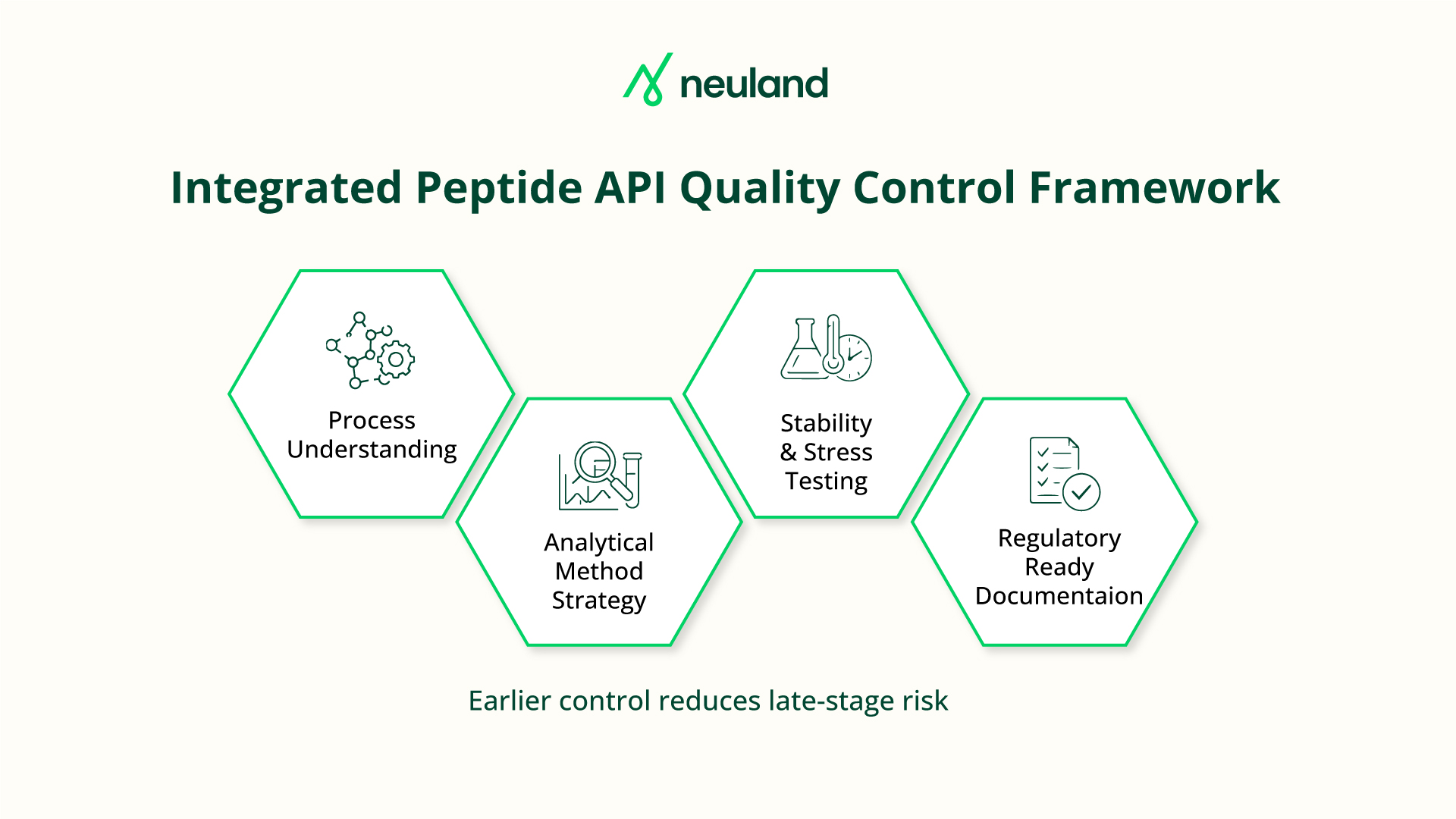
By integrating impurity control into process development, analytical development, and your overall quality strategy from the start, sponsors can better understand impurity risks, establish stronger control strategies, and support regulatory confidence.
First, understanding the synthesis route, resin strategy, coupling conditions, protecting group chemistry, cleavage conditions, purification approach, and isolation process can all influence impurity formation. Understanding where impurities originate enables better process control and more targeted analytical methods.
Second, developing a combination of complementary methods, such as LC–MS/MS, high-resolution mass spectrometry, orthogonal chromatography, capillary electrophoresis, size-exclusion chromatography, sequencing, and structural methods can provide insight into peptide identity, purity, and impurity structure.
Third, stability and stress studies help reveal degradation pathways. Peptide APIs may be sensitive to pH, temperature, light, oxidation, moisture, and formulation conditions. Stress testing can identify vulnerabilities before they become quality, manufacturing, or regulatory issues.
Finally, cross-functional collaboration is critical. Peptide impurity control sits at the intersection of process chemistry, analytical development, quality assurance, regulatory CMC, and manufacturing. Strong alignment across these functions supports robust specifications, stronger documentation, and faster problem-solving.
Neuland integrates process development and advanced analytical characterization to help identify, monitor, and control peptide-related impurities early in the development lifecycle. By aligning process chemistry with analytical strategy, we enable better understanding of impurity formation and more predictable scale-up.
Our experience in complex API development, combined with cGMP manufacturing infrastructure and regulatory-focused CMC support, allows us to build robust impurity control strategies tailored to each peptide’s sequence, synthesis route, and scale requirements.
This integrated approach helps minimize development risks, supports regulatory readiness, and enables a smoother transition from clinical development to commercial manufacturing.
Connect with Neuland to discuss how an integrated impurity profiling and quality control strategy can help reduce development risk and support regulatory readiness.
Explore how we support complex peptide development and manufacturing → peptide synthesis services.