Meet us at CPHI Milan 2026, Booth No. 10H33, Oct 6-8, Fiera Milano, Italy Schedule a Meeting
Your Peptide CDMO Partner from development through to large-scale cGMP manufacturing
Discuss Your Peptide ProgramDeveloping peptide therapeutics presents distinct challenges from managing impurity profiles across complex sequences to navigating the scale-up risks as programs move from clinical to commercial manufacturing, all while meeting stringent global regulatory requirements.
Neuland offers comprehensive peptide CDMO services, supporting the development and manufacturing of novel peptide APIs from early-stage development through to commercial supply. With deep expertise in process development, analytical characterization, and regulatory support, we enable seamless progression from milligram-scale development to multikilogram cGMP manufacturing.
Neuland’s peptide synthesis capabilities are built around three core technologies:
When your peptide program stays with a single development and manufacturing partner, the advantages compound at every stage. Working with Neuland means:
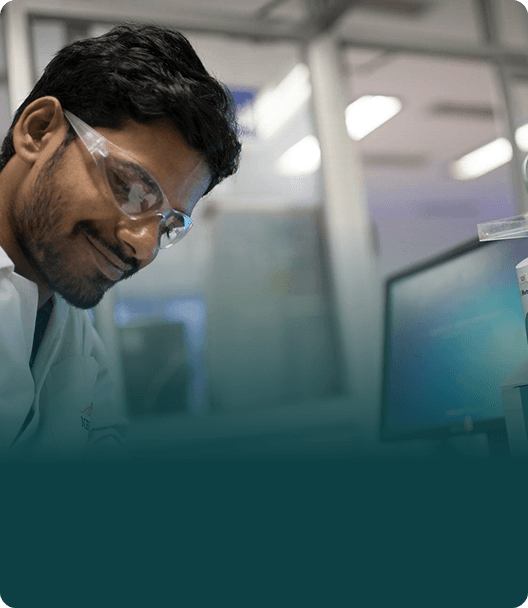
We manage your peptide program under one roof—from early-stage synthesis and analytical method development to clinical scale-up and commercial cGMP manufacturing. This avoids tech transfer risks, reduces timelines, and streamlines communication.
Partner with Neuland for reliable, scalable custom peptide synthesis services, from early development through commercial manufacturing.
Quick answers to help you better understand our CDMO capabilities and approach.
Still have questions? Contact usA peptide CDMO, or Contract Development and Manufacturing Organisation, is a specialised partner that handles the development and manufacturing of peptide-based active pharmaceutical ingredients on behalf of pharmaceutical and biotech companies. As a dedicated peptide CDMO, Neuland provides expertise in custom peptide synthesis services, including process development, analytical validation, and cGMP manufacturing, enabling drug developers to advance peptide programs from early development through commercial supply without building in‑house infrastructure.
Neuland manufactures peptides across a range of lengths using multiple synthesis approaches. Most peptides between five and sixty amino acids are produced by solid phase peptide synthesis (SPPS). Shorter peptides of up to ten amino acids are manufactured via solution phase synthesis for multi-kilogram quantities. For longer or more complex peptides containing up to forty amino acids, segment condensation and ligation techniques are employed.
Yes, Neuland offers cGMP peptide manufacturing at both clinical and commercial scale. Our facilities operate under global cGMP standards, including compliance with USFDA, EMA, and PMDA requirements, with segregated suites and 21 CFR Part 11–compliant data integrity systems to ensure product quality, audit readiness, and regulatory acceptance for clinical and commercial peptide APIs.
Neuland supports peptide programs from early-stage process development through to commercial-scale production. Our newest facility at Bonthapally provides 6,370 litres of combined SPPS and LPPS reactor capacity, with a modular design that supports expansion as programs scale. This infrastructure enables seamless progression from small clinical batches to multi‑ton commercial volumes under a single quality system, without the need for route re‑optimisation.
Yes, Neuland supports clinical trial peptide manufacturing across all phases. Our phase-appropriate development approach ensures that synthesis, purification, and quality control processes are optimised for each stage of your clinical program — from preclinical development through to Phase III while maintaining continuity toward eventual commercial manufacturing.
Neuland has demonstrated expertise in complex and modified peptide synthesis. This includes cyclic peptides with multiple disulfide bonds, PEGylated peptides, azido-peptides for click chemistry, and peptides requiring segment condensation or ligation techniques. Our hybrid technology platform combines solid and liquid phase methods to address structural complexity while maintaining purity and scalability.
Neuland provides comprehensive analytical development and regulatory support for peptide programs. Custom peptide synthesis services include method development and validation, impurity profiling, stability studies, and characterisation using advanced instrumentation. Our regulatory CMC support team assists with documentation and filings to facilitate smooth regulatory submissions and approval-ready peptide APIs.
Most peptides between five and sixty amino acids are produced using standard solid-phase peptide synthesis procedures.
For shorter peptides of up to ten amino acids, solution-phase synthesis enables multi-kilogram production with efficient cycle times.
For longer peptides containing up to forty amino acids, Neuland employs segment condensation and ligation techniques combining both solid and liquid phase strengths.
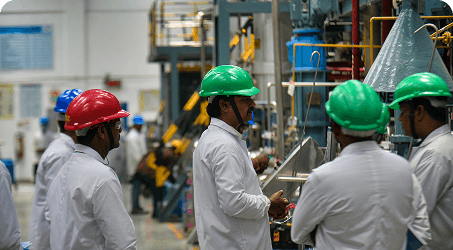
Neuland’s peptide API development approach focuses on early identification of critical process parameters (CPPs) and quality attributes (CQAs), enabling robust and scalable processes. Our scientists design efficient synthetic routes optimized for large-scale peptide synthesis, especially where conventional methods are not viable. We further support peptide API development with impurity profiling, along with stability and degradation studies to define shelf life and storage conditions.
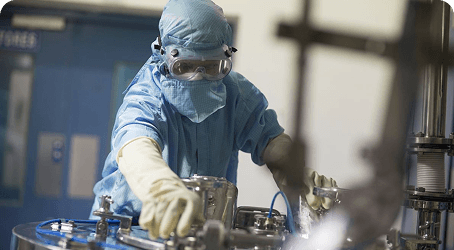
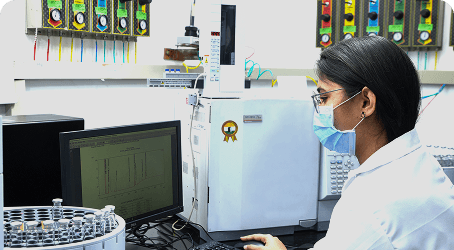
Our analytical R&D supports every stage of peptide API development with robust method development, validation, and quality control. Capabilities include impurity profiling and characterisation, method validation and transfer, and ICH-aligned stability studies, supported by advanced analytical instrumentation for reliable, regulatory-ready outcomes.
Neuland’s cGMP peptide manufacturing capabilities operate under global regulatory standards (USFDA, EMA, PMDA), supported by robust data integrity systems and automated, segregated manufacturing suites. Our peptide capacity continues to expand, with a new facility expected by summer 2026 adding 7,000 L of SPPS and LPPS reactor capacity, alongside our existing large-scale API manufacturing infrastructure across three USFDA-approved sites.