Meet us at CPHI Milan 2026, Booth No. 10H33, Oct 6-8, Fiera Milano, Italy Schedule a Meeting
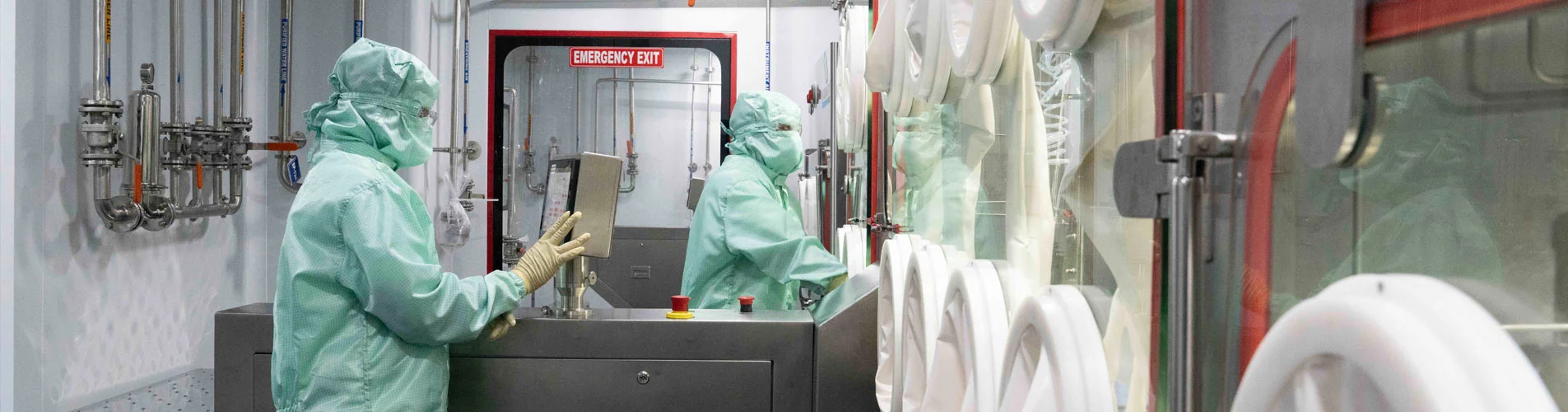
Peptide development rarely follows a single standard route. Sequence length, amino-acid composition, structural modifications, aggregation, impurity formation, and the required manufacturing scale can change which synthesis and purification strategy is most practical.
Neuland’s peptide technology platform brings together solid-phase peptide synthesis, liquid-phase peptide synthesis, hybrid routes, advanced purification, analytical characterization, and cGMP manufacturing. The platform is intended to support peptide programs as requirements progress from process development and clinical supply to commercial manufacturing.
The synthesis route is selected around the molecule and the intended scale, rather than applying one platform to every program.
SPPS builds the peptide chain step by step while it remains attached to a solid support. The platform is commonly suited to medium and long peptide sequences because repeated coupling and deprotection cycles can be performed within a controlled synthesis workflow.
For development and manufacturing, the practical challenge is not simply completing the sequence. Reagent efficiency, coupling performance, resin behaviour, wash volumes, aggregation, deletion sequences, and crude purity all influence scalability and the downstream purification burden.
Synthesis establishes the crude peptide profile. Purification determines whether the target quality can be reached with acceptable recovery and a process that remains practical at scale. For complex peptides, the purification strategy therefore needs to be considered while the synthesis route is being developed.
Preparative chromatographic purification for separation of the target peptide from closely related impurities.
Dynamic axial compression systems supporting preparative purification requirements.
Peptide impurities can arise from incomplete or incorrect sequences, oxidation, deamidation, degradation, aggregation, residual solvents, and process-related contaminants. Analytical development is used to understand these risks, monitor process performance, establish stability-indicating methods, and provide reliable data for manufacturing and product release.
HPLC, UPLC, chiral HPLC, and detector-supported methods for assay, purity, and impurity monitoring.
The combined technology platform can be applied to different peptide formats and development requirements.
Synthesis strategies selected around sequence length, aggregation behaviour, crude quality, and intended scale.
Routes that account for cyclization, folding, disulfide formation, and related impurity risks.
Discuss the sequence, structural features, current process, target quality, material requirement, and intended manufacturing scale with Neuland’s peptide team.
Quick answers to help you better understand our CDMO capabilities and approach.
Still Have Questions? Contact UsSolid-Phase Peptide Synthesis (SPPS) builds peptides on a solid resin support, making it well suited for complex peptide sequences and rapid development. Liquid-Phase Peptide Synthesis (LPPS) is performed in solution and is often used for peptide fragments, intermediates, building blocks, and larger-scale manufacturing. The preferred approach depends on peptide complexity, scale requirements, and the overall manufacturing strategy.
Neuland currently operates SPPS reactors up to 750 SSPS, supporting peptide development, scale-up, and manufacturing programs. Our manufacturing strategy is designed to provide scalability as program requirements evolve.
Neuland's LPPS capabilities range from 250 L to 6250 LLPS, enabling the manufacture of peptide intermediates, fragments, building blocks, and commercial-scale peptide products.
Hybrid peptide synthesis combines solid-phase and liquid-phase synthesis approaches within a single manufacturing route. This strategy can improve efficiency, scalability, and overall process economics for selected peptide programs.
Neuland designs hybrid synthesis routes based on the specific requirements of each peptide program. Manufacturing scale depends on factors such as peptide complexity, route design, batch size, purification needs, and the combination of SPPS and LPPS steps used.
Neuland supports peptide purification using a range of technologies, including preparative HPLC, DAC column systems, salt formation, lyophilization, Nutsche filtration, solvent recovery, and concentration systems. The purification strategy is tailored to the specific requirements of each peptide and process.
Yes. Neuland supports peptide programs from early development and clinical manufacturing through commercial production, leveraging SPPS, LPPS, hybrid synthesis, analytical development, purification, and dedicated peptide manufacturing infrastructure.
Analytical development provides the validated methods and scientific data required to support process development, manufacturing operations, product release testing, stability studies, method transfer, and routine quality control, ensuring product quality throughout the lifecycle.
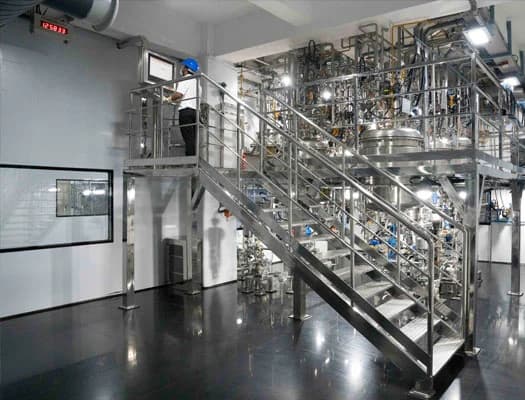
LPPS carries out peptide synthesis in solution and can be suitable for shorter sequences, peptide fragments, intermediates, and building blocks. Solution-phase processing can also provide a practical route where established chemistry and larger batch requirements favour conventional reactor operations.
The route must account for reaction selectivity, isolation of intermediates, solvent use, impurity carryover, and the number of operations needed before the final peptide is assembled.
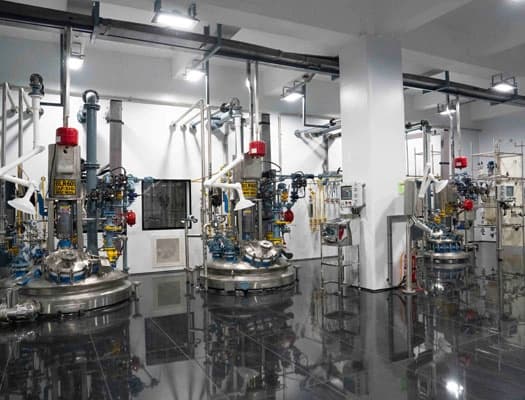
Some peptides are not best served by an entirely solid-phase or entirely liquid-phase process. A hybrid strategy divides the synthesis into practical fragments or segments and combines SPPS with LPPS to balance sequence complexity, process efficiency, purification demand, and manufacturing scale.
Because a hybrid route can use more than one synthesis platform, its effective scale depends on the SPPS and LPPS steps, segment sizes, equipment fit, and purification strategy. It should not be presented as having one independent reactor-capacity figure.
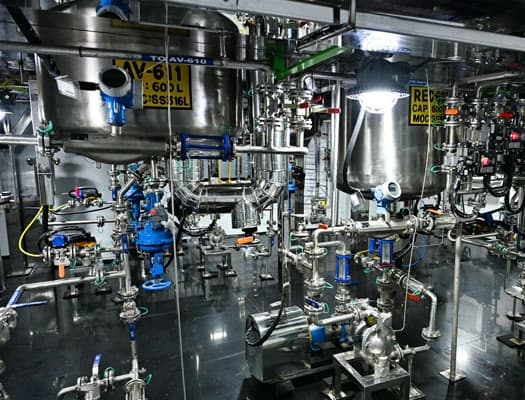
Salt formation strategies, lyophilization, and Nutsche filtration selected according to product and process needs.
Solvent recovery and concentration systems supporting isolation and manufacturing operations.
LC-MS and high-resolution mass spectrometry for molecular confirmation and impurity investigation.
NMR and other suitable techniques for identification and characterization requirements.
Forced degradation, accelerated and long-term stability studies, method validation, and method transfer.
PEGylated peptides, azido peptides, and click-chemistry-enabled formats requiring specialized building blocks or downstream operations.
Peptide fragments, intermediates, and building blocks supporting internal or customer manufacturing routes.