Meet Neuland at CPHI India 2026 | Hall 2, Booth 2D38 | Yashobhoomi Convention Centre, New Delhi | 24-26 November 2026 Schedule a Meeting
Meet Neuland at CPHI India 2026 | Hall 2, Booth 2D38 | Yashobhoomi Convention Centre, New Delhi | 24-26 November 2026 Schedule a Meeting

When a drug transitions from early-stage development to late-stage development, the drugmaker has some big decisions to make. Chief among them:

The pandemic made it quite clear that many late-stage life sciences companies are choosing the last option. The contract manufacturing industry experienced a significant jump in 2020, as companies realized that outsourcing manufacturing could help improve the bottom line. As we discussed in our previous post (‘How CMO Expertise Can Solve Key Challenges in Late-Phase Drug API Projects’), when a CMO has the right expertise, they can alleviate bottlenecks in the process – saving valuable time and money.
Many CMOs and CDMOs claim to be experts in late-phase CMS. But what qualities are needed to become a true specialist in contract manufacturing services for late-stage drug development and commercialization?
Here are the top 4 skills your CMO needs to specialize in late-phase CMS:
Data-Driven
Our earlier blog post on Key Challenges in Late Phase Drug API Projects explained that while the early phases are driven by development, late phases are driven by data. As projects progress through scale-up and into later-stage clinical trials, the goal is to implement an optimized, safe, reproducible manufacturing process.

At Neuland, we do this using a series of data analysis tools and approaches, such as Quality by Design (for lab optimization) and Design of Experiment (for understanding variables). These techniques, along with others, generate data that influences the manufacturing process. This is why it’s so critical that a CMS team be data-driven, and that there is a clear understanding of how to interpret the data.
For example, when we launch a late phase project, we begin by studying data from earlier stages to determine how the products will scale.
Then, as we build out the process, we implement simulations and examine variables, such as solvent volume, temperature, and humidity. We use that data to define operating conditions clearly and to ensure quality, reproducibility and process robustness. With so many potential variables to consider at scale, understanding and being able to effectively use data is a critically important skill.
Effective Management of Yield & Waste AND Comprehensive Knowledge of Mitigation Strategies
In late-phase development, higher material volumes increase the likelihood of waste disposal costs. Late-phase partners should have a comprehensive understanding of cost-effective processes, waste, and yield.
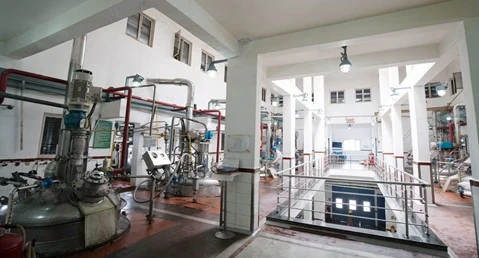
We’ve found that our team must be able to bring down the costs –without making cost the focus. In part, this means knowing which lower-cost vendors to use, while also understanding and implementing green chemistry processes to lower cost and waste. Bringing down the cost is also done by paying close attention to yield and waste generation, as well as ensuring reactions are sustainable from an atom economy perspective.
In the case of one Neuland Labs client, a third-party vendor backed out of supplying materials. We created the compound in-house, substantially reducing costs by using our expertise to design a safe, economical process. Our new process increased yield from 30% to 70% while significantly reducing reagent use and waste generation.
These are just a few of the top skills a team needs to specialize in late-phase contract manufacturing services. Of course, communication skills and regulatory experience are vital as well. All of these traits and skills help avoid the risk of lengthening the commercialization process and impacting the patients relying on a drug – risks that few life sciences companies would be willing to take.