Meet us at Tides Europe 2026, Stand No. 805, Nov 3-5, RAI Amsterdam, Netherlands Schedule a Meeting
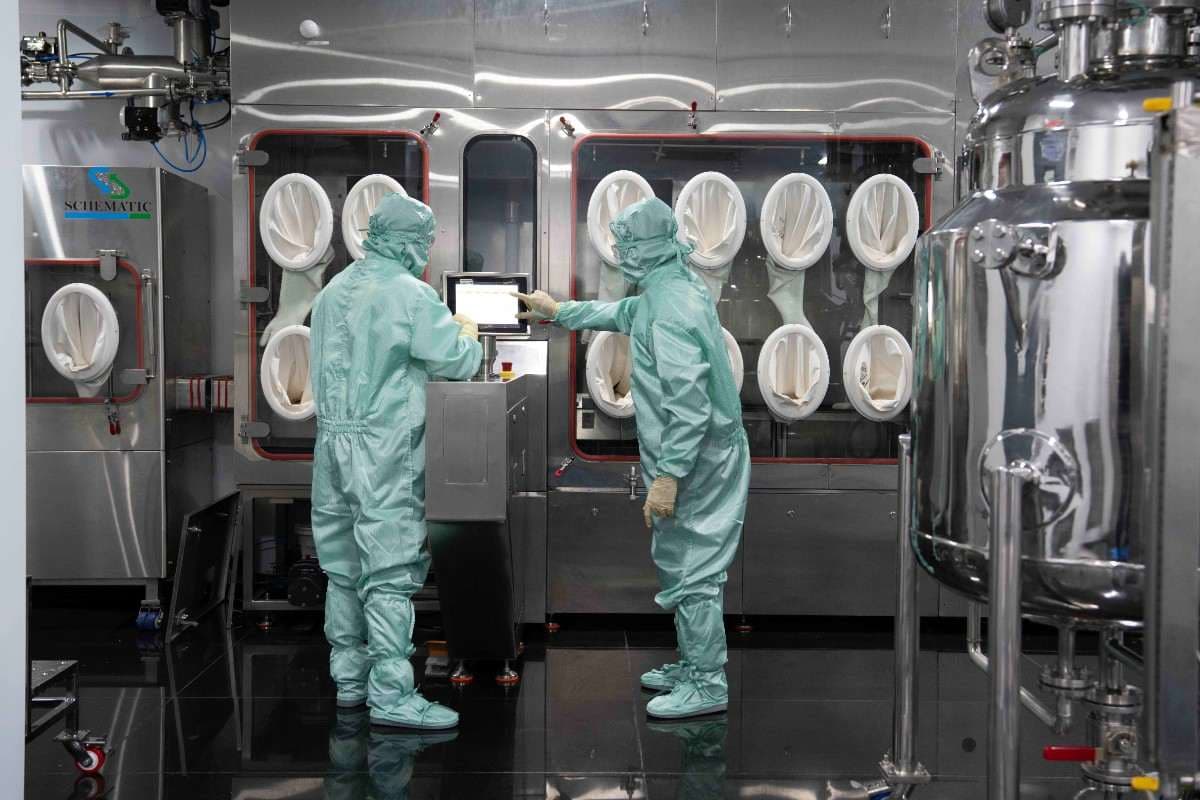
GLP-1 peptides require production volumes far beyond typical peptide drugs, often reaching multi-ton annual output. Most existing peptide manufacturing capacity was built for smaller programs. When GLP-1 demand climbed, many manufacturers found their reactor capacity too small to keep pace.
Adding new capacity for GMP peptide manufacturing takes years, covering construction and regulatory qualification alike. That timeline pushes most companies toward an established peptide CDMO instead of building new capacity in-house. The right partner, therefore, already holds GMP certification and reactor capacity sized for commercial GLP-1 batches.
GMP peptide manufacturing is the production of peptide active pharmaceutical ingredients under current Good Manufacturing Practice standards. Regulators such as the FDA and EMA enforce these standards, along with Japan's PMDA. The rules govern how a peptide is synthesized. They also govern purification and the testing performed before release.
GLP-1 peptides carry longer amino acid sequences than most legacy peptide drugs. For example, semaglutide's chain contains 31 amino acids. Sequences at this length are harder to purify cleanly. That difficulty raises the bar for impurity control at every batch.
Two synthesis methods handle this complexity. SPPS (solid-phase peptide synthesis) builds the chain one amino acid at a time on a resin support. LPPS (liquid-phase peptide synthesis) assembles shorter fragments in solution before they are joined to form the full sequence. Commercial-scale GLP-1 production often uses both methods together.
A peptide CDMO manages this process under one quality system, from synthesis through analytical release testing. That continuity keeps impurity data and batch records consistent as a molecule moves from development into commercial output.
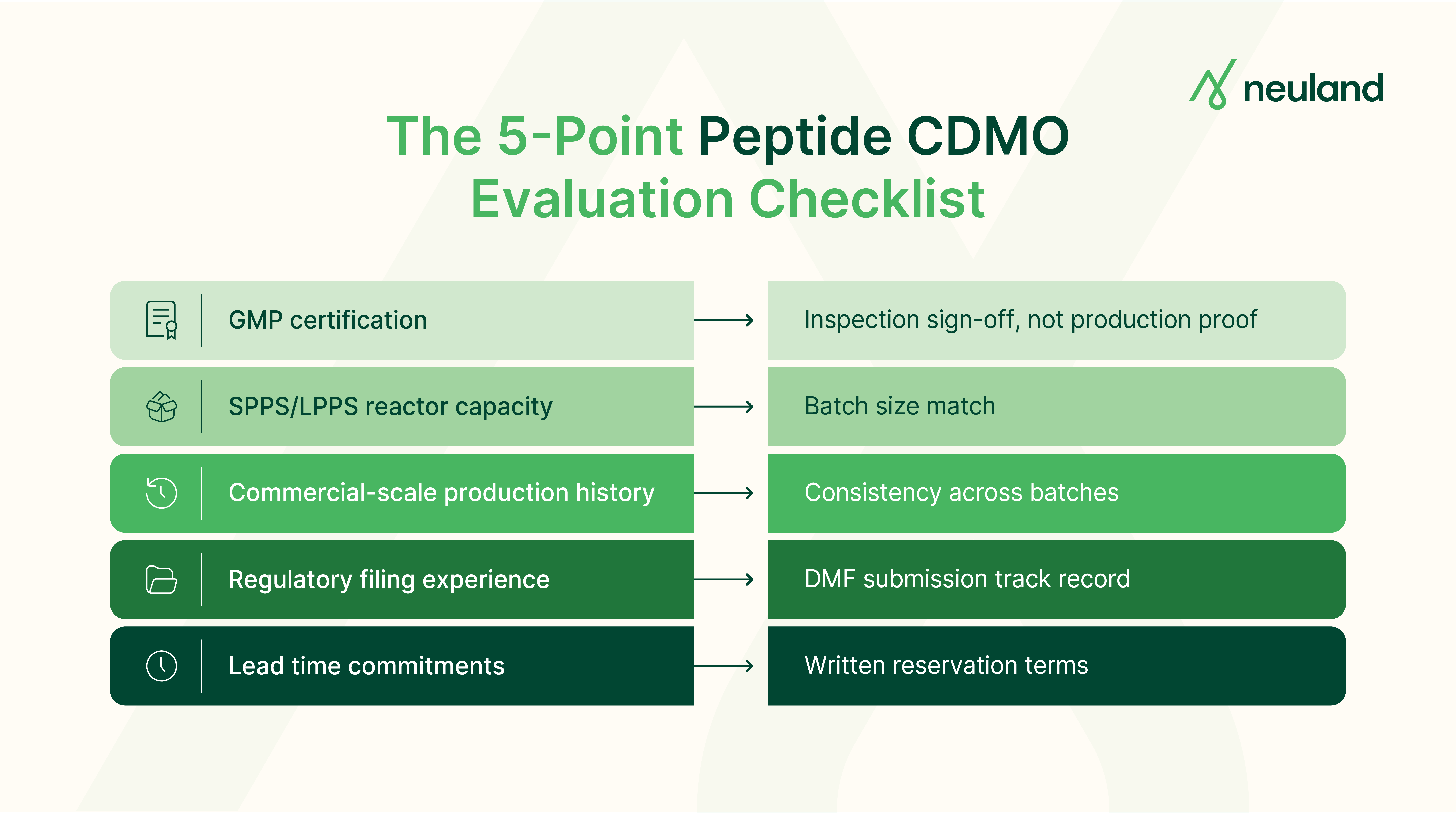
Evaluating a peptide CDMO means checking five specific areas before committing to one. Here are the criteria that matter most for GLP-1 peptide manufacturing, and what each one confirms:
Weigh these five areas together. A peptide CDMO with certification but no matching reactor capacity cannot support commercial GLP-1 volumes. One with reactor capacity but no filing history adds regulatory risk instead.
A small group of CDMOs can scale GLP-1 peptide manufacturing to commercial volume. Batch performance at full scale is what separates them, more than certification alone.
The FDA's February 2025 resolution of the semaglutide shortage shows why this distinction matters. The shortage began in 2022, when demand outpaced available supply. It closed once the manufacturer confirmed its production capacity could reliably meet current and projected demand at full commercial volume. Certification had already been in place for years before that point. The shortage ended when validated capacity caught up to it.
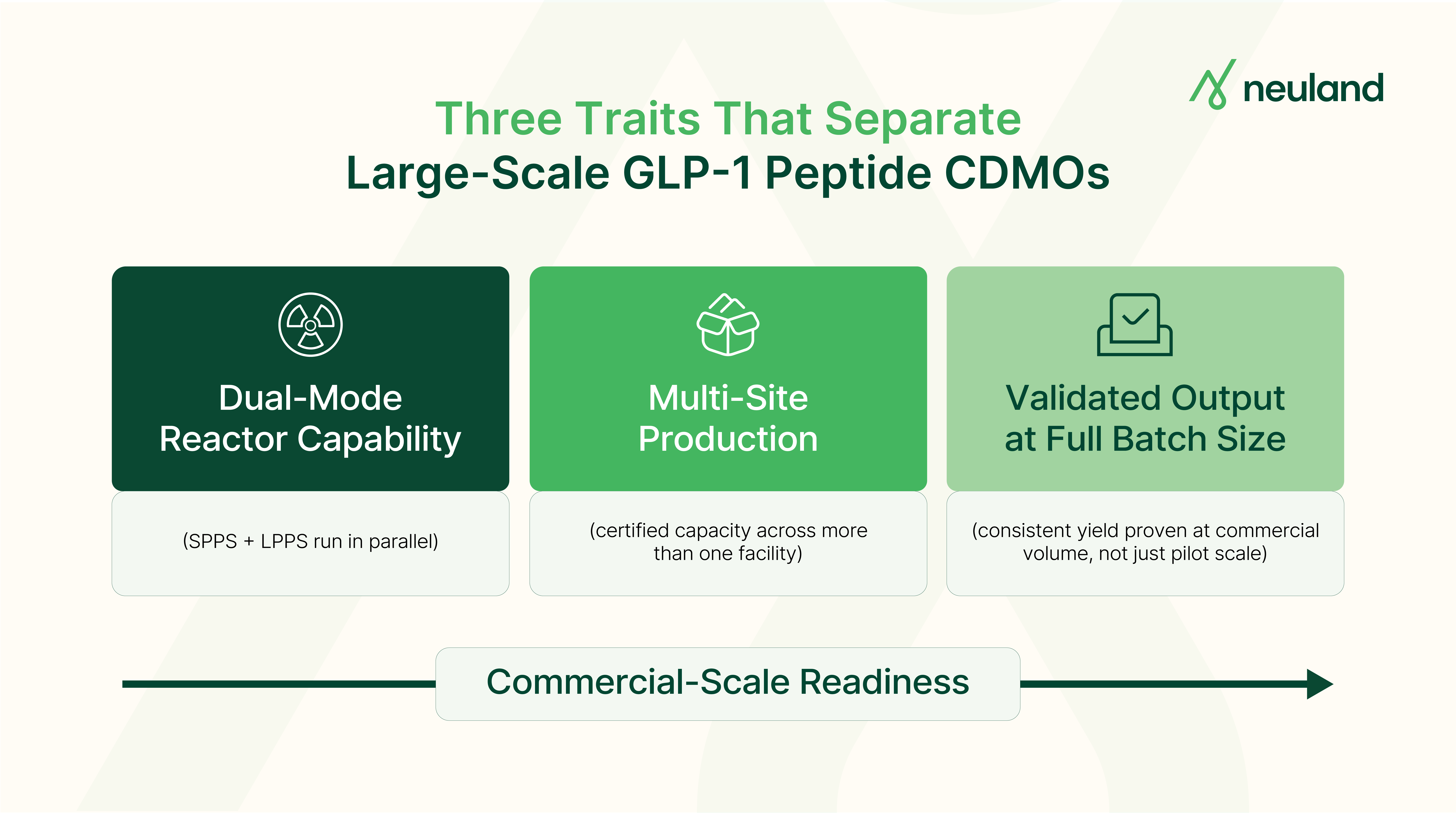
Peptide CDMOs with large-scale cGMP capacity share three traits: commercial-scale reactor volume, consistent batch yield at that volume, and cGMP certification tied to a proven production history.
Reactor volume is the first marker. A peptide CDMO that runs only clinical-stage reactors produces gram- to single-digit-kilogram batches. It is enough for a trial supply but not for a launched GLP-1 drug. A CDMO with large-scale capacity operates reactors built for multi-kilogram and multi-ton output instead.
| Capability | Clinical-Stage CDMO | Large-Scale CDMO |
|---|---|---|
| Typical batch output | Grams to a few kilograms | Multi-kilogram to multi-ton |
| Reactor design | Sized for trial supply | Sized for national or global commercial demand |
| Production history | Limited or early-stage | Documented commercial batches |
Reactor size by itself doesn't confirm capacity. A peptide CDMO with large-scale capacity also holds consistent yield and purity across every batch it runs at that volume.
Certification narrows the field further. It doesn't confirm experience in commercial-scale production. Only CDMOs that combine certification with documented large-volume output qualify as having true large-scale cGMP capacity.
Neuland manufactures GLP-1 peptides through SPPS and LPPS. It operates under cGMP standards and holds approvals from the FDA, EMA, and Japan's PMDA. Current SPPS reactors run up to 500L, while LPPS reactors span 250L to 3,000L, sized for multi-kilogram output. Data integrity across both lines follows 21 CFR Part 11, backed by DCS-based automation.
Neuland's existing SPPS and LPPS capacity is scaled further by a new commercial peptide facility at its Bonthapally campus near Hyderabad. This facility adds 6,370L of combined SPPS and LPPS reactor capacity.
This combination matters for buyers evaluating a CDMO today. Current SPPS and LPPS capacity supports near-term GLP-1 programs. The new facility adds a path to larger commercial volumes.
Planning your next step with a peptide CDMO?
Neuland assigns a dedicated project team to each molecule, carrying forward batch and process knowledge as the program moves toward commercial scale. Analytical release testing runs alongside manufacturing under the same quality system. Connect with Neuland's peptide team to discuss your project's next stage.
Lead time for peptide manufacturing capacity varies with batch size and reactor availability. It also depends on the facility booking schedules. Commercial-scale slots for high-demand molecules like peptides often fill months ahead of the intended production date. Confirming a reservation window early, before committing to a launch timeline, avoids capacity gaps later.
GMP peptide manufacturing at commercial scale is offered by CDMOs holding current cGMP certification from regulators like the FDA, EMA, and Japan's PMDA. These providers combine SPPS and LPPS reactor lines with a documented history of commercial batch production.
Yes, Neuland supports both clinical-stage and commercial-scale peptide manufacturing within the same facilities. This means a molecule can move from early development through launch volume without changing providers. You can explore Neuland's peptide services to see how this applies to a specific molecule.
Demand for peptide CDMO capacity has increased as GLP-1 prescribing volumes have grown quickly across multiple therapeutic uses. Manufacturing capacity takes years to build, while patient demand can shift within months. That mismatch keeps commercial-scale peptide CDMO slots in short supply.