Meet us at Tides Europe 2026, Stand No. 805, Nov 3-5, RAI Amsterdam, Netherlands Schedule a Meeting
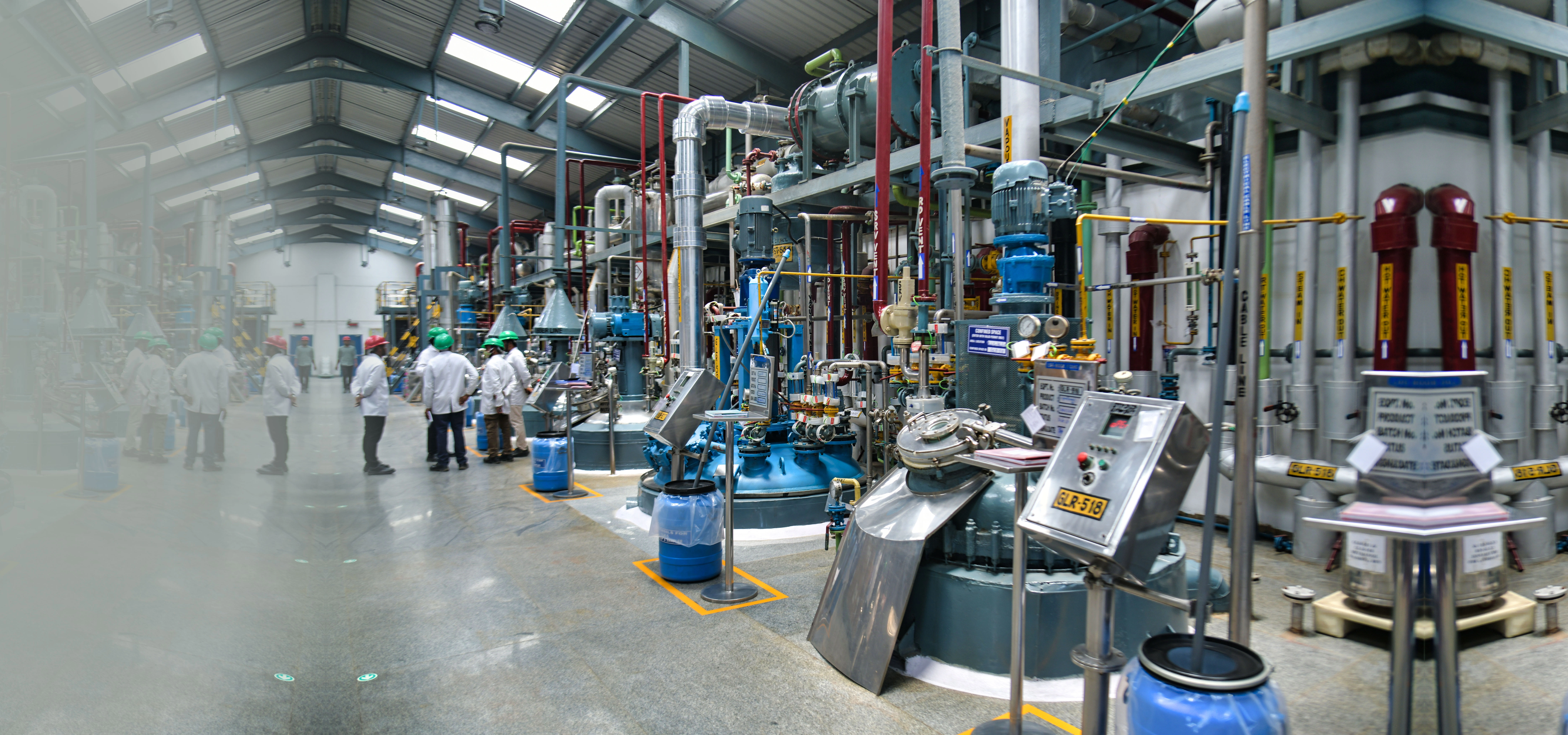
From clinical supply to commercial-scale production, partner with a team experienced in developing and manufacturing complex peptides with quality, reliability, and speed.
Neuland provides cGMP peptide manufacturing services from clinical supply through commercial production. Our integrated platform supports solid-phase peptide synthesis (SPPS), liquid-phase peptide synthesis (LPPS), hybrid manufacturing approaches, purification, lyophilization, and final API production under robust quality systems.
With dedicated peptide manufacturing infrastructure, scalable reactor capacity, advanced purification technologies, and global regulatory compliance, we help accelerate peptide programs while maintaining product quality, consistency, and supply reliability.
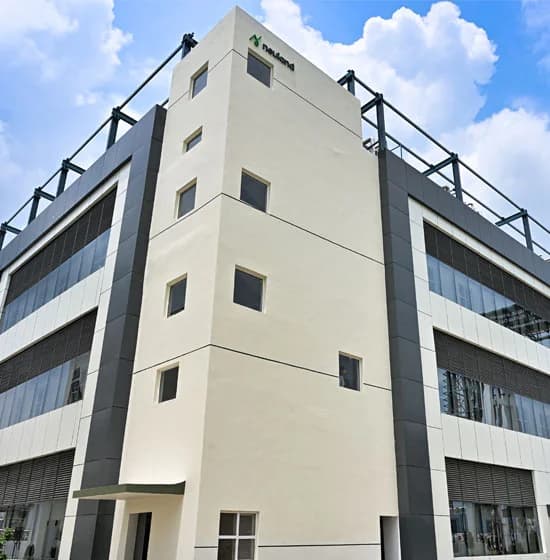
Neuland’s new multi-product, multi-modular peptide facility is designed for expansion from production in the tens-of-kilograms range to larger-scale commercial manufacturing.
The facility is DCS-automated and equipped for solid-phase synthesis, liquid-phase synthesis, and global deprotection.
Multi-product, multi-modular configuration intended to support phased expansion and changing program requirements.
Planned SPPS equipment includes 500L synthesizers and 250L synthesizers and provision for expansion to two 2 kL synthesizers.
6250L LPPS capacity for clinical-to-commercial scale, with a dedicated space to accommodate multiple 5 kL glass-lined reactors.
Multiple DAC columns of 45 cm and 60 cm diameter are planned for high-throughput purification, with scope to expand to 80 cm DAC columns.
Planned 100 L and 200 L lyophilizers with isolators, plus a separate nutsche-filter dryer area.
Tangential-flow filtration and ion-exchange columns are included in the planned purification concept.
Distributed control system (DCS) automation is identified for the planned facility.
Automated peptide synthesizer, tray lyophilizer, UPLC and HPLC, coulometry and Karl Fischer, GC-MS and QTOF-HRMS, and circular-dichroism and fluorescence spectroscopy.
Peptide process performance cannot be judged by synthesis yield alone. Crude purity, impurity proximity, recovery, solvent demand, cycle time, and isolation behaviour determine whether the overall manufacturing route is practical.
Preparative purification using DAC systems and 15 cm and 30 cm DAC columns in the current pilot plant.
Purification and isolation through salts including TFA, HCl, acetate, and sodium counter-ion forms where applicable.
Tray lyophilization, vacuum tray drying, and process-development work on scalable alternatives to lyophilization.
The upcoming facility incorporates precipitation and crystallization capabilities as part of its integrated manufacturing and purification platform, supporting efficient scale-up from clinical to commercial production.
Neuland’s current cGMP peptide pilot plant at Manufacturing Unit I supports synthesis, purification, drying, isolation, and controlled handling. The equipment’s include:
Discuss the sequence, structural features, synthesis route, purification challenge, material requirement, and intended clinical or commercial scale with Neuland’s peptide team.
Quick answers to help you better understand our CDMO capabilities and approach.
Still have Questions? Contact UsNeuland does cGMP manufacturing of peptide APIs, NCEs, intermediates, impurities, clinical trial material, preparative purification, lyophilization, analytical development, stability studies, and regulatory support.
Neuland states expertise in SPPS, LPPS, and hybrid synthesis, including standard sequential synthesis and segment-condensation strategies.
The current pilot plant includes a 250 L glass-lined reactor, 100 L solid-phase reactor, preparative HPLC systems with 15 cm and 30 cm DAC columns, lyophilization, filtration, drying, rotary evaporation, controlled handling, and a Class 100,000 clean-room area.
A DCS-automated, multi-product, multi-modular facility with SPPS, LPPS, global-deprotection operations, larger DAC purification, precipitation, crystallization, spray drying, lyophilization, and filtration capabilities. Current project status should be verified before publication.
The Neuland capabilities include cyclic peptides, PEGylated peptides, azido peptides, click-chemistry applications, C-to-N terminal cyclization, sulfur bridges, and peptides with one to three disulfide bonds.
The documented development strategy includes feasibility, optimization, CPP and CQA establishment, analytical method development, standards and impurity preparation, laboratory validation, process-safety data, what-if studies, pGTI evaluation, forced degradation, and technology-transfer documentation.